Global Health Justice and Governance
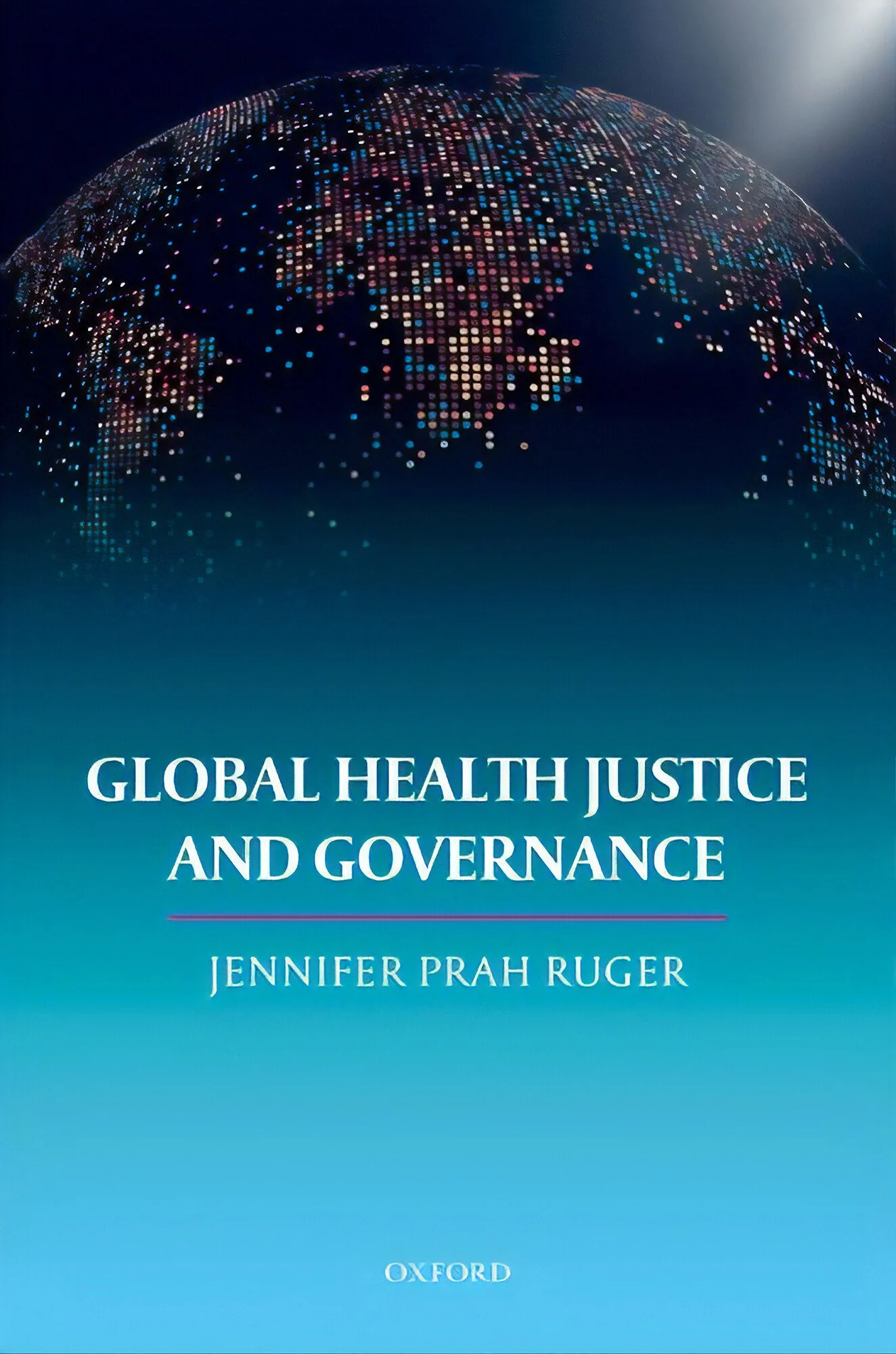
In a world beset by serious and unconscionable health disparities, by dangerous contagions that can circle our globalized planet in hours, and by a bewildering confusion of health actors and systems, humankind needs a new vision, a new architecture, new coordination among renewed systems to ensure central health capabilities for all. Global Health Justice and Governance lays out the critical problems facing the world today and offers a new theory of justice and governance as a way to resolve these seemingly intractable issues. A fundamental responsibility of society is to ensure human flourishing. The central role that health plays in flourishing places a unique claim on our public institutions and resources, to ensure central health capabilities to reduce premature death and avoid preventable morbidities. Faced with staggering inequalities, imperiling epidemics, and inadequate systems, the world desperately needs a new global health architecture. Global Health Justice and Governance lays out this vision.
ENDORSEMENT
Endorsements by leading political science, economics, philosophy, world affairs, and public health scholars.

Ravi Kanbur
T.H. Lee Professor of World Affairs
Cornell University
“This book on will be an invaluable resource to a range of intersecting readerships, including students, analysts, and policy makers in global health, global justice and global institutions. The author gives a comprehensive account of how the current system works, its shortcomings, principles for redesign, and practical ways forward. She brings rigorous scholarship to bear on one of the major policy issues of our time”

Michael Marmot
Professor of Epidemiology; Chair of WHO Commission on Social Determinants of Health
University College London
“Inequalities in health abound within and between countries and are the major challenge of global health. Why should we act on them, and how should we bring various actions together? This work of both humanity and truly impressive scholarship puts human capabilities and flourishing at the centre and builds outwards. It is exactly the book I needed to give both theoretical structure and practical action for global health”

Henry S. Richardson
Professor of Philosophy
Georgetown University
“Building on her influential health capability paradigm, Ruger here deepens its normative grounding, elaborates a global division of responsibilities for seeing to it that health justice is achieved, and pinpoints where the relevant agents are falling short on these responsibilities. She proposes and defends specific reforms of international law and of the ways that global institutions, nation-states, and individuals go about securing health. Only Ruger, equally at home with foundational normative arguments, theories of governance, and epidemiology, could have built such a formidable and compelling edifice”

Amartya Sen
Thomas W. Lamont University Professor; Nobel Laureate in Economic Sciences
Harvard University
“In this vigorously reasoned analysis of the injustices in global health situation today, Jennifer Ruger provides both insightful causal investigations and identification of promising ways and means of overcoming the problems that have to be addressed. Combining conceptual and analytical concerns with critically assessed proposals of remedial reforms, Ruger has made a major advance towards a better understanding of some of the most distressing aspects of the unequal world in which we live. This is an essential reading not only for health care specialists but also for concerned citizens across the world”

Beth A. Simmons
Andrea Mitchell University Professor of Law, Political Science and Business Ethics
University of Pennsylvania
“Jennifer Prah Ruger has launched nothing less than a devastating critique of the shameful way human society tolerates unequal life-chances and allocates health resources world-wide. Her vision of shared health governance will strike some as idealistic, but it is a bold moral response to the global patchwork-of-a-system that has left so many people's lives at early risk”

Ernesto Zedillo
Frederick Iseman '74 Director of the Yale Center for the Study of Globalization, Former President of Mexico
Yale University
“At a time when many relatively poor countries have decided to move seriously towards Universal Health Coverage while a rich one is trying to move farther away from it, Ruger's encyclopedic treatise on the ethical, justice and global dimensions of healthcare is pertinent and illuminating”
SYMPOSIUM
The book was the subject of a special symposium issue of the journal Global Health Governance on Global Health Justice and Governance, 2021 with contributions by seven scholars, Cary Coglianese, Lawrence Gostin, Prabhat Jha, Jillian Kohler, Benjamin Mason Meier, Justice Nonvignon, and Kok-Chor Tan.

Cary Coglianese
Edward B. Shils Professor of Law and professor of Political Science
University of Pennsylvania Carey Law School
“Fortunately for regulatory scholars, the publication of Jennifer Prah Ruger’s recent book, Global Health Justice and Governance, 7 provides an excellent basis for understanding the challenges of both global and domestic public health governance, and it offers an illuminating normative framework for the pursuit of global health justice. Global health governance and domestic regulatory governance share a common set of problems and common strategies for solving those problems … By drawing out these connections, I seek in this essay to show what the vision of global health governance offered in Prah Ruger’s remarkable book has to offer scholars and practitioners of domestic regulatory governance. Prah Ruger argues that meaningful progress in securing global health justice ultimately depends on widely accepted norms and on the coordinated efforts of a diverse array of actors and institutions --or on what she calls” “shared health governance. I suggest that much the same is needed for domestic regulatory governance to be successful. Rather than seeing regulation as just a set of rules on the books, it is more useful to view domestic regulatory governance as a social enterprise involving the interaction of a diverse range of individuals and organizations. I conclude with seven lessons that domestic regulators can learn from Prah Ruger’s model of shared health governance”

Lawrence Gostin
University Professor, Founding Linda D. & Timothy J. O’Neill Professor of Global Health Law, Faculty Director
Director of World Health Organization Collaborating Center on Public Health Law & Human Rights
O’Neill Institute for National & Global Health Law
“Jennifer Prah Ruger’s seminal scholarship has demonstrated that she is perhaps the world’s most insightful thinker and innovator in tackling the unconscionable health inequities that pervade societies, within and among nations. In her pivotal book, Global Health Justice and Governance, Prof. Prah Ruger foresees that a deadly contagion could circle a globalized planet in days … And this is exactly where Prof. Prah Ruger’s scholarship is so consequential. Her book predicted that the way countries and the world are governed would not be fit for purpose in tackling health and social injustice. Prof. Prah Ruger’s book speaks about a bewildering confusion of health actors and systems, arguing that humankind needs a new vision, a new architecture, and new coordination to ensure health capabilities for all. Indeed, many of our global institutions have themselves been embroiled in controversy, not the least of which is the World Health Organization”

Prabhat Jha
Endowed Professor in Global Health and Epidemiology at the Dalla Lana School of Public Health
University of Toronto
“One of Jennifer Prah Ruger’s important contributions to global health justice in her pivotal book, Global Health Justice and Governance, is to propose the key conditions that can enable progress in global health. I define three such conditions as the “Prah Ruger Conditions”, and provide examples of their relevance both to actual progress in global health and to the generation of knowledge to reduce premature mortality. The Prah Ruger conditions comprise three interrelated ideas. First is a global desire to affect change on one or more specific health issues or a collective aspiration. The second is a shared health governance model based on the shared aspiration. The third criterion is the central role of public finance in enabling these conditions to effect actual health improvements”

Jillian Kohler
Professor, Leslie Dan Faculty of Pharmacy
University of Toronto
“Prah Ruger proposes a new way forward in global health, focusing on shared health governance that prioritizes the global and domestic duty to achieve health equity. Within this enterprise is the concept of Mutual Collective Accountability (MCA). MCA is urgently needed in global health governance to foster a sense of solidarity amongst countries and bring global cooperation into force. The relevance of MCA is heightened today given the imperatives of global cooperation to meet the challenges of the COVID-19 pandemic … Prah Ruger’s MCA is indeed a concept that has traction in terms of how to manage our global health crisis. It carries with it the potential to foster solidarity and cooperation amongst countries so that global health gains may be realised. As the COVID-19 pandemic continues to create unprecedented challenges for the global health community, the relevance and urgency of MCA are patently evident”

Benjamin Mason Meier
Professor of Global Health Policy in the Department of Public Policy and the Department of Health Policy and Management
University of North Carolina at Chapel Hill
“From the deeply theoretical to the highly practical, Prah Ruger’s new vision of global health justice analyzes the current public health problems of a globalized world, frames the norms by which global health policy should be structured, examines the current global health architecture, and proposes novel institutions to reconceptualize global health governance … Global Health Justice & Governance can provide a moral foundation for the future of global health governance, with Prah Ruger already applying the theoretical frameworks of her analysis in assessing moral obligations to prevent, contain, and respond to the COVID-19 pandemic.7 Extending the theoretical framework of her earlier work to a global level of analysis, Prah Ruger’s complete vision of global health justice can reimagine global health governance in preparing for future threats”

Justice Nonvignon
Associate Professor and Health Economist at the School of Public Health
University of Ghana
“The book Global Health Justice and Governance by Jennifer Prah Ruger1 raises key issues about the current state of global health governance, many of which issues represent a state of significant confusion. In this commentary, I focus on inequalities in global health, some of which are perpetuated by the very global institutions that are mandated to help reduce such inequalities. I further argue that such inequalities have been largely unexplored. I argue that building global health governance on values, as argued by Prah Ruger is key to bringing global health closer to communities, but that values in themselves could present some confusion. Finally, I argue that the current confusion in itself presents hope … Prah Ruger3 addresses fundamental issues often left unanswered – underpinning the current challenges in global health, governance and global health justice – including inequalities and externalities, development assistance for health and the myriad problems caused mainly by actors and organization in the space of development assistance for health (DAH), especially relating to vertical and horizontal programs and the capacity of national institutions to cope with the many challenges that come with “donor proliferation””

Kok-Chor Tan
Professor of Philosophy
University of Pennsylvania
“Jennifer Prah Ruger’s Global Health Justice and Governance2 presents a distinctive and systematic approach to global health justice. Prah Ruger’s “Provincial Globalism”, as she calls her theory, is grounded in the universal idea of individual health capabilities. But it is also “provincial” (in a good way) in that it is sensitive to the complex local and global obligations of health justice and the diversity of international institutional arrangements.3 In this commentary, I reflect on three philosophical questions inspired by Prah Ruger’s ambitious book”
WORKSHOP

University of Pennsylvania, 2019
The book was the subject of a workshop with Mary Bassett (Director of the François-Xavier Bagnoud (FXB) Center for Health and Human Rights and FXB Professor of the Practice of Health and Human Rights at the Harvard T.H. Chan School of Public Health), Cary Coglianese (Edward B. Shils Professor of Law and Professor of Political Science at the University of Pennsylvania and Founding Director of the Penn Program on Regulation), Lawrence Gostin (University Professor; Founding Linda D. & Timothy J. O’Neill Professor of Global Health Law; Faculty Director, O’Neill Institute for National & Global Health Law; Director, World Health Organization Collaborating Center on Public Health Law & Human Rights), Yanzhong Huang (Professor at the School of Diplomacy and International Relations; Director, Center for Global Health Studies, Seton Hall University), Prabhat Jha (University Professor at the University of Toronto and Director of the Centre for Global Health Research at Unity Health, Toronto), Jillian Kohler (Professor at the Leslie Dan Faculty of Pharmacy, Dalla Lana School of Public Health, and the Munk School of Global Affairs and Public Policy, University of Toronto and Director of the WHO Collaborating Centre for Governance, Transparency and Accountability in the Pharmaceutical Sector), Benjamin Mason Meier (Professor of Global Health Policy at the University of North Carolina at Chapel Hill), Justice Nonvignon (Associate Professor and Health Economist at the School of Public Health, University of Ghana), Thulasiraj Ravilla (Director- Operations at Aravind Eye Care System), and Kok-Chor Tan (Professor of Philosophy at the University of Pennsylvania)
BOOK EVENT
University of Pennsylvania, 2019
The book was the subject of a special book event with LaShawn R. Jefferson, Deputy Director at Perry World House.
Book Launch

The book was the subject of a book launch discussion at the Human Development and Capability Association (HDCA) Annual Conference, Buenos Aires, Argentina, 2018, with Mario Biggeri, María Elena Brenlla, Marco Ricardo Tellez Cabrera, Giulia Greco, and Sridhar Venkatapuram.
Roundtable

International Studies Association (ISA) Annual Convention, 2017
Baltimore, MD
The book was the subject of a roundtable with Sophie Harman, Owain D. Williams, Stefan H. Elbe, and Jeremy Youde.
Panel

American Society for Bioethics and Humanities (ASBH) Annual Conference, 2019
Pittsburgh, PA
The book was the subject of a panel with Alex J. London (moderator), Matthew McCoy, Anne Barnhill, Eric Juengst, and Danielle Wenner.

Harvard University, 2019
Boston, MA
The book was the subject of a panel with Carmel Shachar (moderator), Michael Stein and Alicia Ely Yamin.
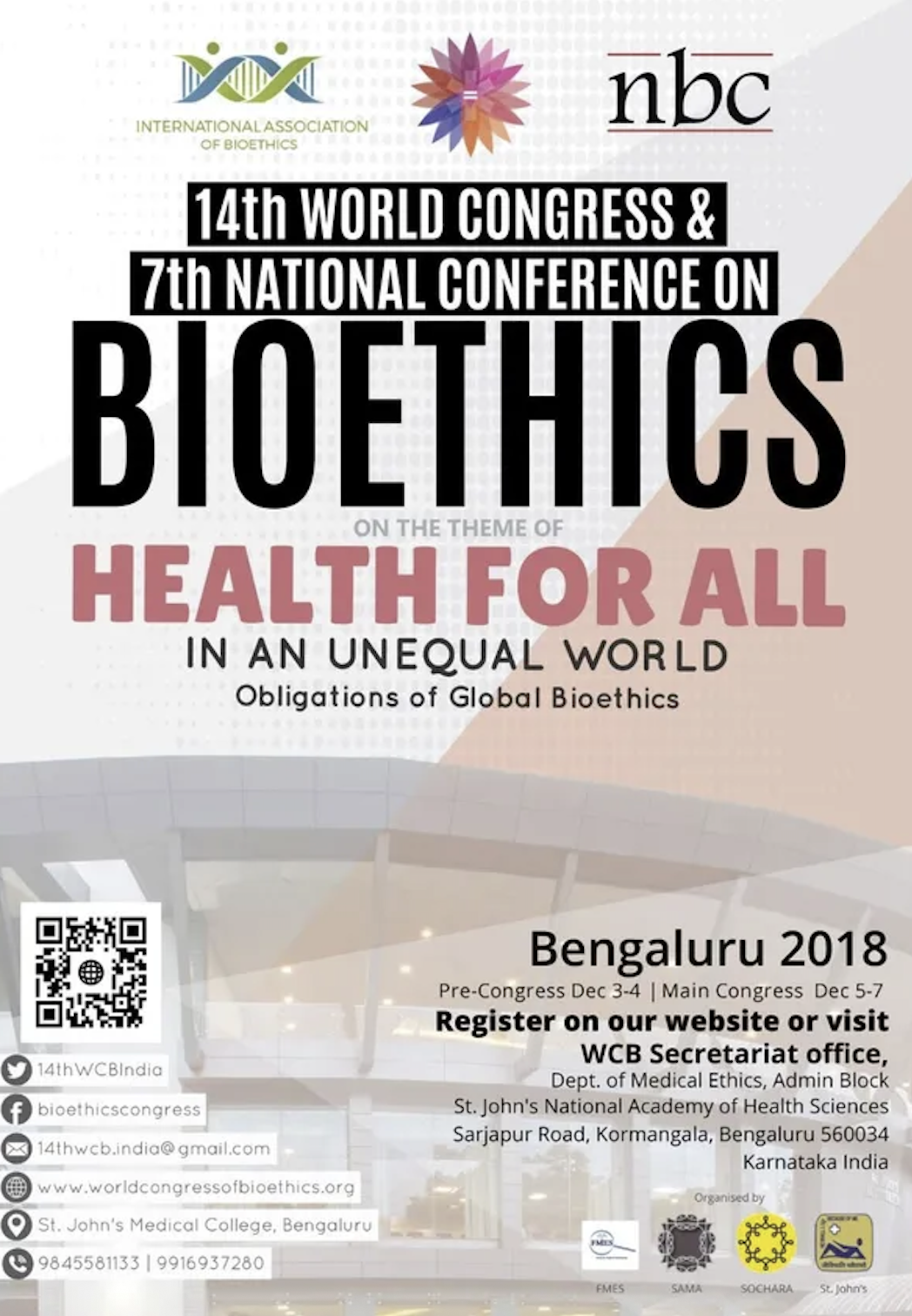
World Congress of Bioethics Annual Meeting, 2018
Bengaluru, Karnataka, India
The book was the subject of a panel with Ruth Macklin, Joseph Millum, Nchangwi Syntia Munung, and Gopal Sreenivasan (discussant).
VIDEO
The book was the subject of a short video.